
Northrop Grumman
American aerospace and defense contractor formed by merger in 1994.

Clearfieldcity · CC BY-SA 3.0
Northrop Grumman Corporation, headquartered in West Falls Church, Virginia, is an American aerospace and defense company that designs and manufactures systems for aeronautics, defense, missions, and space. It is the 5th largest contractor of the U.S. federal government, receiving over 2% of all federal government spending at contractors. The company was formed in 1994 through the merger of Northrop Corporation and Grumman Aerospace.
- field
- Aerospace and defense
- nationality
- American
- known_for
- B-2 Spirit, B-21 Raider, James Webb Space Telescope, F-35 components
- rank
- 110th on Fortune 500
- revenue_source_2024
- 87% from US federal government, 12% international
Verified Timeline
Lore & Background
Northrop Grumman was created in 1994 when Northrop Aircraft bought Grumman Aerospace for $2.1 billion. Grumman had been founded by Leroy R. Grumman in December 1929 on Long Island, New York, and built most US Navy aircraft during World War II, including the TBF Avenger, F4F Wildcat, and F6F Hellcat. After the war, Grumman branched into aluminum canoes, ballistic missiles, all-weather radars, the Apollo Lunar Module, and stealth bombers. Northrop Corporation, founded in California in 1939 by Jack Northrop, was known for lightweight fighters like the F-5 and YF-17, and for experimental flying wing aircraft such as the XB-35 and YB-49, which paved the way for the B-2 Spirit Stealth Bomber. After the merger, Northrop Grumman made several major acquisitions, including Vought, Logicon, Westinghouse Electronic Systems, Litton Industries, Newport News Shipbuilding, TRW Inc., and Orbital ATK (renamed Northrop Grumman Innovation Systems). The company's divisions include Aeronautics Systems (29% of 2024 revenues), which develops the B-21 Raider strategic bomber and produces fuselage and radar for the F-35 and F/A-18; Defense Systems (19%), which modernizes intercontinental ballistic missiles including the LGM-35 Sentinel; Mission Systems (25%), which creates military radar, sensors, and C4I systems; and Space Systems (27%), which develops satellites, the Cygnus spacecraft, and motors for the NASA Space Launch System. Northrop Grumman and its industry partners have won the Collier Trophy nine times, including for the development and production of the James Webb Space Telescope, launched in 2021. In 1998, a merger with Lockheed Martin was considered but abandoned after resistance from the Department of Defense and Department of Justice.
Reader's Guide
Northrop Grumman is a major American defense contractor, ranking 110th on the Fortune 500 and as the 5th largest contractor of the U.S. federal government, receiving over 2% of all federal contractor spending. In 2024, 87% of its revenues came from the U.S. federal government, reflecting its deep integration into national security infrastructure. The company's significance lies in its development of strategic bombers (B-2 Spirit, B-21 Raider), key components for the F-35 Joint Strike Fighter, and space systems including the James Webb Space Telescope and Cygnus spacecraft. Its history traces back to two pioneering firms: Grumman, which built the Apollo Lunar Module and most U.S. Navy aircraft in World War II, and Northrop, known for flying wing designs that led to the B-2. The merger in 1994 created a diversified defense giant that has since expanded through acquisitions of Litton, TRW, and Orbital ATK. Northrop Grumman's legacy includes nine Collier Trophies and ongoing work on next-generation systems like the B-21 Raider, forecasted for combat readiness in 2029, and the LGM-35 Sentinel intercontinental ballistic missile modernization.
Did You Know?
- Northrop Grumman receives over 2% of all federal government spending at contractors.
- The company was formed in 1994 when Northrop Aircraft bought Grumman Aerospace for $2.1 billion.
- Northrop Grumman and its industry partners have won the Collier Trophy nine times, including for the James Webb Space Telescope.
- In 1998, a merger between Northrop Grumman and Lockheed Martin was considered but abandoned after resistance from the Department of Defense and Department of Justice.
- The B-21 Raider strategic bomber is forecasted to be ready for combat in 2029.
Two Pioneers, One Legacy
Northrop Grumman did not spring from a single workshop. It was forged from two distinct aerospace lineages. Leroy R. Grumman planted his Grumman Aircraft Engineering Corporation on Long Island in December 1929; by 1939 the firm had expanded and moved to Bethpage, New York. During World War II, Grumman built most of the U.S. Navy's aircraft, including the Wildcat, Hellcat, and Avenger. After the war it repurposed leftover aluminum into canoes before branching into ballistic missiles, all-weather radar, and the Apollo Lunar Module. His engineers pursued the radical flying-wing concept with the XB-35 and YB-49 in the late 1940s and early 1950s. Though those prototypes never entered service, their aerodynamic philosophy would echo in the B-2 Spirit Stealth Bomber, for which Northrop served as prime contractor. The company also delivered the P-61 Black Widow, the first aircraft designed specifically as a night fighter. In 1994, Northrop Aircraft purchased Grumman Aerospace for $2.1 billion, fusing both histories into a single corporation headquartered in West Falls Church, Virginia.
A Portfolio Spanning Sky, Sea, and Orbit
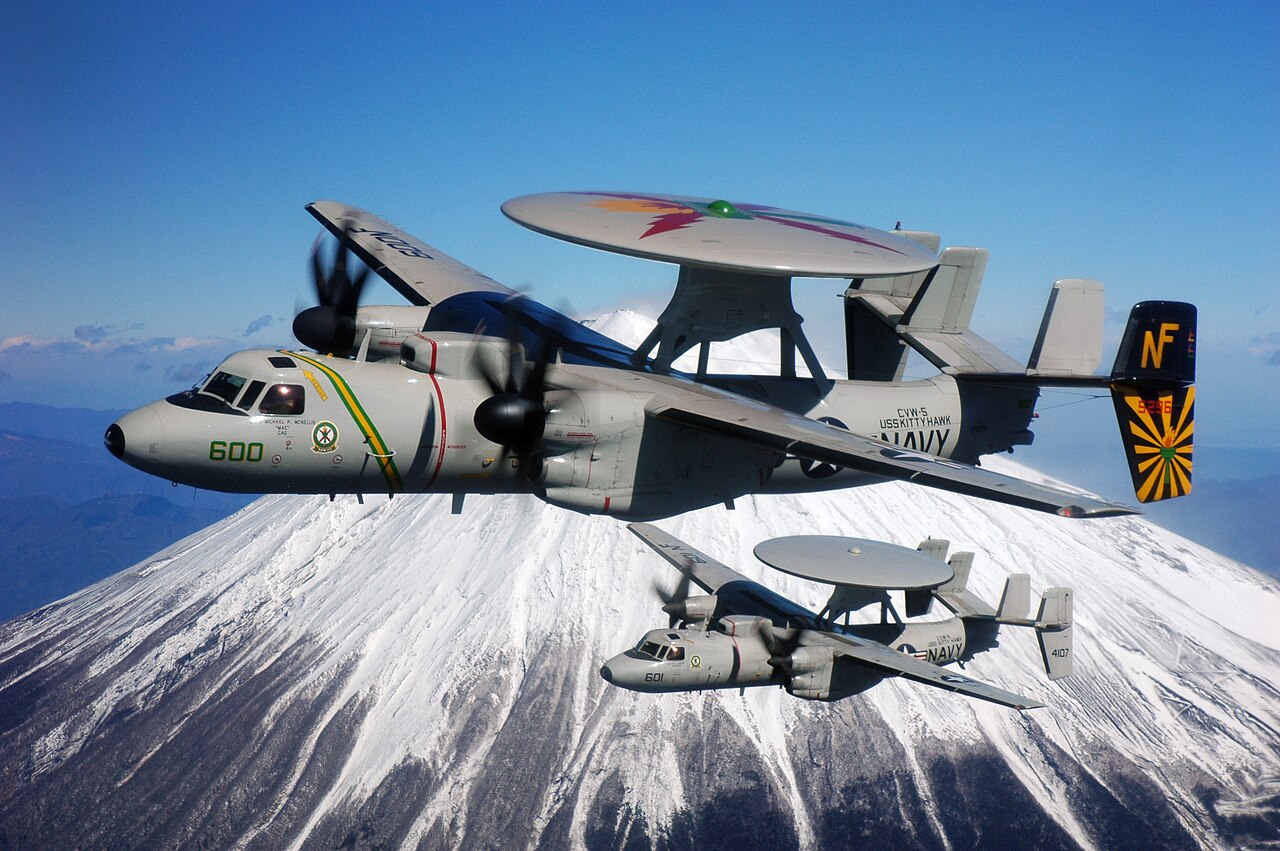
Northrop Grumman organizes its engineering output into four major divisions, each contributing a substantial share of 2024 revenue. The Aeronautics Systems division, at 29 percent, is developing the B-21 Raider, a strategic bomber capable of delivering both conventional and thermonuclear payloads, with combat readiness forecast for 2029. It also maintains the B-2 Spirit, which the Raider will eventually replace, and produces fuselage and radar components for the F-35 Lightning II and F/A-18 Super Hornet. The E-2 Hawkeye airborne early-warning aircraft and the MQ-4C Triton unmanned aerial vehicle round out the portfolio. The Defense Systems division, at 19 percent, handles the LGM-35 Sentinel intercontinental ballistic missile modernization, the Integrated Air and Missile Defense Battle Command System, and the M1156 precision guidance kit. Mission Systems, at 25 percent, supplies the radar and sensor backbone of American air power: the AN/APG-77 AESA for the F-22 Raptor, the AN/APG-81 for the F-35, the AN/APG-83 for the F-16, the APQ-164 PESA for the B-1 Lancer, night vision goggles, and the AN/AAQ-37 Distributed Aperture System. Space Systems, at 27 percent, builds Satcom satellites, the Cygnus uncrewed spacecraft, boosters for NASA's Space Launch System, and provides logistics support for the Lunar Gateway.
Built by Absorption
Northrop Grumman's growth story is written largely in acquisition announcements. After the Cold War, Northrop began a string of purchases, absorbing Grumman Aerospace, Westinghouse, and TRW Inc. The 1994 merger with Grumman Aerospace, priced at $2.1 billion, set the template. In the years that followed, the combined company added Vought, Logicon, Xetron, Westinghouse Electronic Systems' defense electronics unit, and Ryan Aeronautical. In 1998, a full merger with rival Lockheed Martin was explored but scrapped after pushback from the Department of Defense and the Department of Justice. By 1999 the company had acquired Teledyne Ryan, California Microwave, and Data Procurement Corporation, and it formed the AMSEC LLC joint venture with SAIC, which grew from roughly $100 million in revenue in 2000 to about $500 million by fiscal year 2007. The 2000s brought Litton Industries in 2001, a shipbuilder and Navy defense-electronics provider, requiring a new Delaware holding company, NNG, Inc. The most recent major move came in 2018, when Northrop Grumman completed its purchase of Orbital ATK, rebranded it as Innovation Systems, and folded that unit into the broader organization the following year.
Scale, Recognition, and the Federal Relationship
By any measure, Northrop Grumman sits at the top of the American defense-industrial food chain. The company ranks as the fifth-largest contractor to the U.S. federal government, capturing more than two percent of all federal spending directed to contractors. Its position at number 110 on the Fortune 500 list underscores the sheer scale of its operations. The revenue picture tells a story of deep federal entanglement. In 2024, 87 percent of the company's income came directly from the U.S. federal government, while the remaining 12 percent was sourced from international customers. This concentration reflects the nature of its product line—strategic bombers, intercontinental ballistic missiles, military radar arrays, and space-based surveillance platforms are, by definition, government procurement items. Recognition in the industry has been equally consistent. Northrop Grumman and its industry partners have claimed the Collier Trophy nine separate times. Among the most celebrated of those wins was the development and production of the James Webb Space Telescope, launched in 2021. Beyond its core aerospace and defense work, the company also operates Northrop Grumman Computing Systems, Inc., which delivers computing services to the broader business community.
Gallery

Frequently Asked Questions
Who is Northrop Grumman?
Northrop Grumman is an American aerospace and defense corporation headquartered in West Falls Church, Virginia. It designs and builds systems spanning aeronautics, defense, missions, and space exploration.
How was Northrop Grumman formed?
The company came into existence in 1994 when Northrop Corporation and Grumman Aerospace merged into a single entity. That union combined two long-standing defense players into one of the industry's largest contractors.
What is Northrop Grumman most famous for?
It is widely recognized for building the B-2 Spirit and B-21 Raider stealth bombers, contributing key components to the F-35, and developing the James Webb Space Telescope. These projects span its core areas of stealth aviation, fighter support, and deep-space science.
How big is Northrop Grumman in the U.S. defense market?
It ranks as the fifth-largest contractor to the U.S. federal government, pulling in over two percent of all federal spending directed at contractors. In 2024, roughly 87 percent of its revenue came from U.S. federal contracts while about 12 percent came from international customers.
Where does Northrop Grumman sit on the Fortune 500?
The company holds the 110th position on the Fortune 500 list. That ranking reflects its status as a major player in American aerospace and defense manufacturing.
More in Companies And Brands 1-23
Spotted an error? Know more?
This is a living reference — every entry is fact-audited, and reader corrections feed straight into our audit queue. Suggest an edit · See this site's audit record