
Oracle Corporation
Pioneer of relational database and enterprise software.

via Wikipedia: Oracle Corporation · see source
Oracle Corporation is an American multinational technology company headquartered in Austin, Texas, co-founded in 1977 by Bob Miner, Ed Oates, and Larry Ellison. It is among the 50 largest companies in the world by market cap and ranked 66th on the Forbes Global 2000 as of 2025, known for its database software, enterprise applications, and cloud infrastructure.
- founded
- June 16, 1977
- founders
- Larry Ellison, Bob Miner, Ed Oates
- headquarters
- Austin, Texas (as of December 2020)
- field
- Technology (database software, enterprise applications, cloud infrastructure)
- nationality
- American
- known_for
- Oracle Database, enterprise resource planning (ERP) software, cloud infrastructu
Verified Timeline
Lore & Background
Oracle began as Software Development Laboratories (SDL) in Santa Clara, California, after its founders took inspiration from Edgar F. Codd's 1970 paper on relational databases. The company changed its name to Relational Software, Inc. in 1979, then to Oracle Systems Corporation in 1983, aligning with its flagship Oracle Database. The name came from a CIA project codename; the founders reportedly flipped a coin between that and a compiler project for the PDP-4. Larry Ellison, deemed the worst programmer among the three, became the salesman and designed database tables to demonstrate SQL to customers. In the late 1980s, Oracle began selling enterprise software, starting with financial software, despite internal opposition. Early versions were weak and competed with partners, but acquisitions like JD Edwards and PeopleSoft (the second hostile takeover in software history) allowed Oracle to compete with SAP, becoming the world's largest enterprise software vendor by the mid-2000s. In 2010, Oracle launched Fusion Applications to unify features from acquisitions. The company moved its headquarters from Redwood Shores to Austin in 2020, and announced a further move to Nashville in 2024. In 2025, Oracle partnered with OpenAI, SoftBank, and MGX in the Stargate joint venture to invest $500 billion in AI infrastructure. In September 2025, Clay Magouyrk and Mike Sicilia became co-CEOs, replacing Safra Catz. In 2026, Oracle acquired a 15% stake in TikTok's U.S. operations. The company reported 141,000 employees in May 2026, down from 162,000 a year earlier, amid layoffs and increased AI investment.
Reader's Guide
Oracle Corporation's significance lies in its foundational role in commercializing relational database technology, which became the backbone of enterprise data management. Its Oracle Database set industry standards, and the company's aggressive expansion into enterprise applications through acquisitions like PeopleSoft and JD Edwards allowed it to challenge SAP and dominate the enterprise software market. Oracle's later pivot to cloud infrastructure, including partnerships with Microsoft, Amazon, and Google, positioned it as a key player in the AI and cloud computing race. The company's involvement in the Stargate AI infrastructure project and its stake in TikTok's U.S. operations underscore its ongoing influence in technology and geopolitics. However, Oracle's history also includes internal conflicts over application development, layoffs, and a workforce reduction of nearly 13% in 2026, reflecting the volatile nature of the tech industry. Its legacy is that of a persistent innovator that evolved from a small consultancy to a global tech giant, shaping how businesses store, manage, and leverage data.
Did You Know?
- Oracle's name came from a CIA project codename; the founders flipped a coin to choose between that and a compiler project for the PDP-4.
- Larry Ellison was considered the worst programmer among the three founders, so he became the salesman.
- Oracle's acquisition of PeopleSoft was the second hostile takeover in the history of the software industry.
- In 2013, Oracle executed the largest-ever U.S. stock market transfer, moving from Nasdaq to the New York Stock Exchange.
- As of May 2026, Oracle employed 141,000 full-time workers, down from 162,000 a year earlier—a reduction of nearly 13%.
Founding & the Birth of a Database Giant
Oracle traces its roots to June 16, 1977, when Larry Ellison, Bob Miner, and Ed Oates established Software Development Laboratories in Santa Clara, California. The trio had previously worked as consultants on a large-scale memory project for Ampex, and it was during this period that Ellison encountered Edgar F. Codd's 1970 paper on relational database management systems. An article in an IBM research journal, shared by Oates, further exposed the team to IBM's System R database. Though Ellison initially aimed to build a product compatible with System R, IBM's secrecy around its error codes blocked that path. The company rebranded to Relational Software, Inc. in 1979 and then to Oracle Systems Corporation in 1983, a name borrowed from the codename of a 1977 database project for the Central Intelligence Agency—Oracle's first customer. According to executive Mike Humphries, the founders essentially flipped a coin to choose between the CIA project and a compiler contract for the PDP-4. Recognizing Ellison as the weakest programmer among the three, the group assigned him to sales, where his ability to design demonstration tables and showcase SQL's power to clients became a defining competitive advantage.
The Enterprise Applications Gambit
By the late 1980s, Oracle expanded beyond its database core into enterprise applications, beginning with financial software and later manufacturing tools. Many internal stakeholders resisted this move—the early application releases were underwhelming, they clashed with the company's independent software vendor and value-added reseller partners, and the applications division remained unprofitable until after 2000. Nevertheless, Oracle persisted, acquiring major vendors like JD Edwards and PeopleSoft, the latter being the second hostile takeover in software industry history. This aggressive strategy ultimately allowed Oracle to rival SAP, and by the mid-2000s it had become the world's largest enterprise software vendor. In 2010, the company launched Fusion Applications to unify the capabilities of PeopleSoft, Siebel Systems, and JD Edwards into a single integrated suite. Ken Jacobs, a company executive, later explained that the applications portfolio created a strategic footprint in customers, giving Oracle a credible full-stack offering that elevated its sales conversations from the technology floor to the boardroom. Large customers began viewing Oracle as a strategic partner rather than merely a technology supplier, fundamentally reshaping how the sales force operated.
Cloud Wars and the Multi-Cloud Pivot
Facing intense competition from Amazon Web Services, Oracle made a surprising strategic pivot in 2019 by partnering with its former rival Microsoft. The alliance connected Oracle Cloud directly with Microsoft Azure, enabling customers to store data across both platforms and run workloads on either. Observers noted the move was not only a counter to Amazon but also a response to Google and Salesforce, which had acquired Looker and Tableau Software respectively. In 2023, the two companies deepened the collaboration by delivering Oracle database services on Oracle Cloud Infrastructure running inside Microsoft Azure. A year later, Oracle extended similar partnerships to Amazon Web Services and Google Cloud, making its database available across all four major hyperscaler providers. This multi-cloud strategy represented a dramatic shift from Oracle's earlier closed-ecosystem approach and positioned the company to compete in an era where enterprises increasingly demand flexibility across competing cloud platforms rather than locking into a single vendor's infrastructure.
Mega-Acquisitions and a Shifting Headquarters
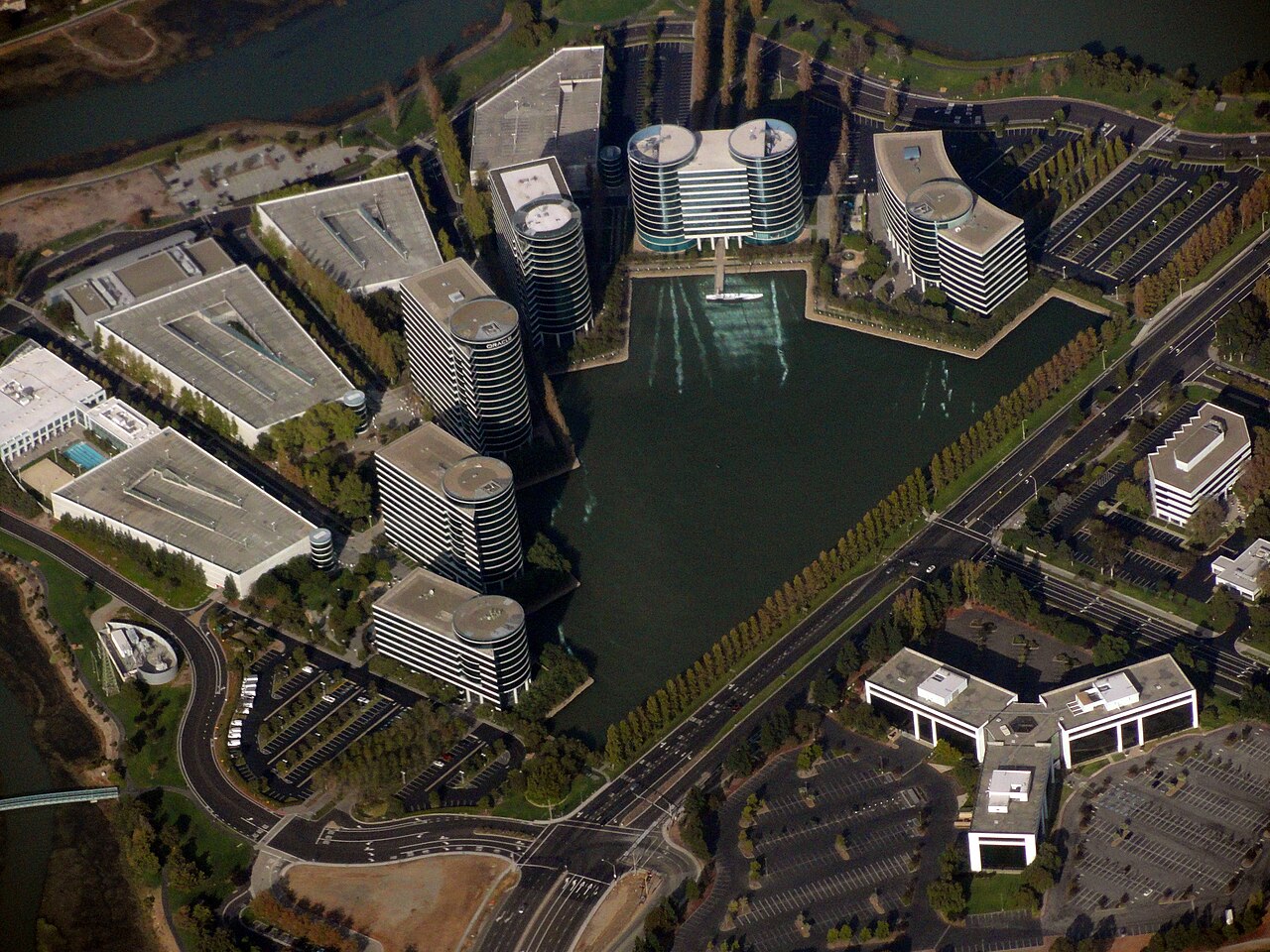
Oracle's most recent years have been defined by transformative acquisitions and international investments. In December 2021, the company announced its purchase of Cerner, a health information technology firm, completing the deal on June 8, 2022, for $28.3 billion in cash. That same month, Oracle acquired Federos, a company specializing in AI and automation tools for network performance. On the global stage, the company committed $1.5 billion to the Kingdom of Saudi Arabia in February 2023, including a data center in Riyadh, and announced a $1 billion investment in Spain in June 2024 to bolster AI and cloud computing capabilities. Oracle's headquarters have also shifted multiple times: from Redwood Shores, California, to Austin, Texas, in December 2020, and then to a new complex in Nashville, Tennessee, as announced in April 2024. In 2013, the company executed the largest-ever U.S. stock market transfer, moving its listing from Nasdaq to the New York Stock Exchange. As of 2025, Oracle ranks among the 50 largest companies globally by market capitalization and sits at 66th on the Forbes Global 2000.
Gallery



Frequently Asked Questions
What is Oracle Corporation?
Oracle is an American multinational technology company co-founded in 1977 by Larry Ellison, Bob Miner, and Ed Oates. It is one of the 50 largest companies globally by market capitalization and sits at 66th on the Forbes Global 2000 list as of 2025.
What is Oracle Corporation best known for?
The company built its reputation as a pioneer of relational database technology and has since expanded into enterprise resource planning software and large-scale cloud infrastructure. Its flagship product, Oracle Database, remains a backbone for businesses worldwide.
Where is Oracle Corporation headquartered?
Oracle relocated its headquarters to Austin, Texas in December 2020. The company is American in nationality and operates as a multinational with a global footprint.
When and by whom was Oracle Corporation founded?
The company was established on June 16, 1977. Three co-founders—Larry Ellison, Bob Miner, and Ed Oates—launched what would become a dominant force in enterprise technology.
Why does Oracle Corporation matter in the tech world?
Oracle helped define the relational database paradigm that still underpins modern data management, and its enterprise software ecosystem has shaped how organizations run their operations for decades. Its cloud infrastructure offerings keep it competitive in today's market.
More in Companies And Brands 1-23
Spotted an error? Know more?
This is a living reference — every entry is fact-audited, and reader corrections feed straight into our audit queue. Suggest an edit · See this site's audit record